


NASA Rover Discovers Evidence of Ancient Beach on Mars
Published:
২৮ জানুয়ারী ২০২৬, ১৫:১২
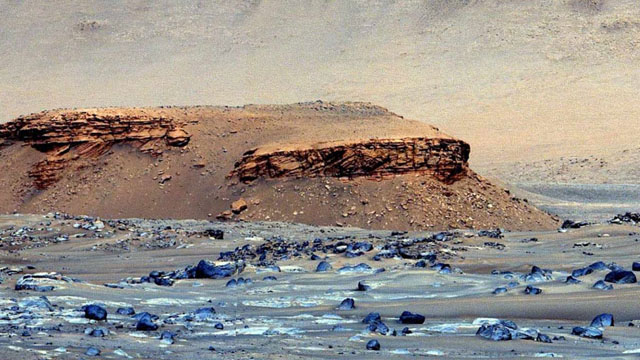
NASA’s Perseverance rover has made a groundbreaking discovery on Mars, finding clear evidence of an ancient beach that points to a time when the Red Planet had water, rainfall, and a humid environment. Scientists say this strengthens the possibility that Mars could have once supported conditions suitable for life.
The discovery was confirmed on 26 January by an international research team led by Imperial College London. Their study focused on Jezero Crater, a large impact crater on Mars, where the rover identified layered sandstone with rounded grains. These formations are typically created by the action of waves, suggesting that the area was once the shore of a vast lake.
According to researchers, around 3.5 billion years ago, Jezero Crater held a massive lake. Over time, volcanic rocks in the surrounding area eroded into sand, which was deposited along the lake’s edge by wave action. Analysis of high-resolution images taken by Perseverance provided detailed insight into the structure and composition of these rocks, revealing how the ancient shoreline once looked.
The study also identified carbonate minerals in the area, which are usually formed in the presence of water and can trap organic molecules, providing further evidence of a watery past. Additionally, researchers from Purdue University in the United States found white kaolinite clay, which forms in warm, wet conditions with prolonged rainfall.
Scientists say the findings show that Mars was once warm, wet, and potentially habitable, with conditions capable of supporting life. This discovery not only gives a clearer picture of the planet’s geological history but also offers hope in the search for ancient life on Mars.
As Perseverance continues to explore Jezero Crater, researchers hope to uncover more clues about the planet’s past environment, water activity, and the possibility that life may have existed on the Red Planet billions of years ago.

Comment: