


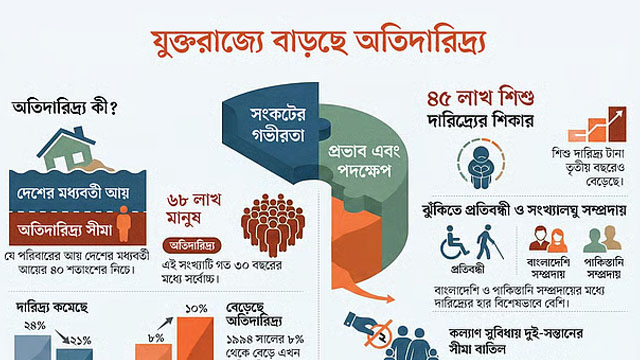
A record number of people in the United Kingdom are now living in what experts describe as “extreme poverty,” highlighting the deepening impact of the prolonged cost-of-living crisis. Recent studies and reports by social welfare organisations indicate that millions are struggling to meet their most basic needs, including food, housing, heating, and healthcare.
Among the hardest-hit groups are people of Bangladeshi origin, who continue to face disproportionately high poverty rates compared to the national average. However, Bangladeshis are not alone. Other ethnic minority communities—particularly those of Pakistani, African, Caribbean, and Eastern European backgrounds—are also significantly affected. In addition, a growing number of white British citizens, especially those in low-income and insecure employment, are falling into severe financial hardship.
The rise in extreme poverty has been driven by multiple factors. Sharp increases in housing rents, soaring energy prices, and persistent food inflation have eroded household incomes. At the same time, wage growth has failed to keep pace with rising living costs, leaving many families unable to cover essential expenses. The situation has been further compounded by cuts to welfare benefits and stricter eligibility criteria for social assistance.
Charities report an unprecedented surge in demand for food banks, emergency shelters, and debt advice services. Many working families, including those with full-time employment, are now reliant on charitable support to survive. Social workers warn that extreme poverty is no longer limited to the unemployed, but increasingly affects key workers, single parents, and those on zero-hour or temporary contracts.
Ethnic minority communities are particularly vulnerable due to structural inequalities. Lower average incomes, higher rates of overcrowded housing, and concentration in low-paid sectors such as hospitality, care work, and delivery services have increased their exposure to economic shocks. Recent migrants and refugees face additional barriers, including language challenges, limited access to public funds, and insecure immigration status.
Children are among the worst victims of the crisis. Reports suggest that a growing number of children are experiencing food insecurity, poor nutrition, and inadequate housing conditions, which experts warn could have long-term consequences for health, education, and social mobility.
Campaigners and economists have urged the UK government to take urgent and decisive action. Key demands include increasing welfare support in line with inflation, ensuring a genuine living wage, expanding affordable housing, and introducing targeted assistance for the most vulnerable communities. There have also been calls for greater investment in mental health and social services, as financial stress continues to take a heavy toll on wellbeing.
Without meaningful policy intervention, analysts warn that extreme poverty in the UK could worsen further, deepening social inequality and undermining long-term economic stability. As living costs remain high, the crisis is increasingly seen not just as an economic issue, but as a growing social emergency.

Comment: